FOVEA Lens Portfolio

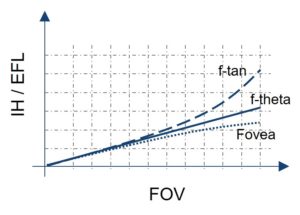
The term “Fovea Distortion” is derived from the fovea centralis which is located in the retina’s center and is responsible for high-acuity human vision.
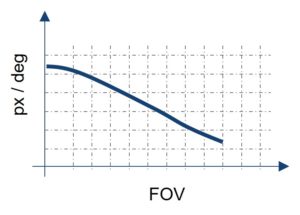
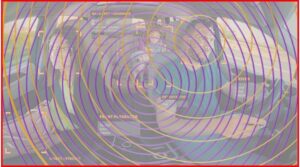
Sunex lenses with Fovea distortion map this type of behavior and “exaggerate” the central details while trading off the off-axis details. Practically speaking, this results in a higher number of pixels per degree in the center, allowing machine vision algorithms to benefit from a higher resolution in the center field compared to standard f-theta distortion lenses.

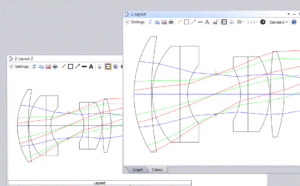
Sunex’s expertise and experience in manipulating distortion profiles to align with application-specific requirements have been valued by customers for many years. Our Tailored Distortion™ expertise has often been applied to SuperFisheye™ lenses to correct large FOV lenses’ barrel distortion and we are now also offering the former mentioned FOVEA™ Lenses.

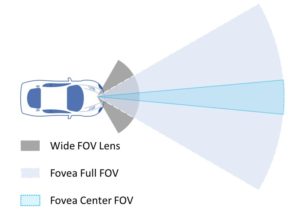
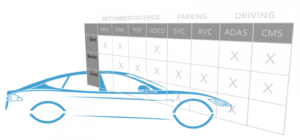
Applications that benefit from a Fovea distortion profile include forward-looking ADAS and autonomous driving  (AD) cameras, where the vehicle must detect objects at a far distance in the central FOV range while still having a wider FOV capability to maintain peripheral vision.

PN Description EFL F/# IMC Unit Price Files
Loading…

Don’t find what you are looking for?
Try searching our entire Off-The-Shelf Portfolio or use our Imaging System Builder to get started on a custom solution.

Key Technologies

High Dynamic Range (HDR)
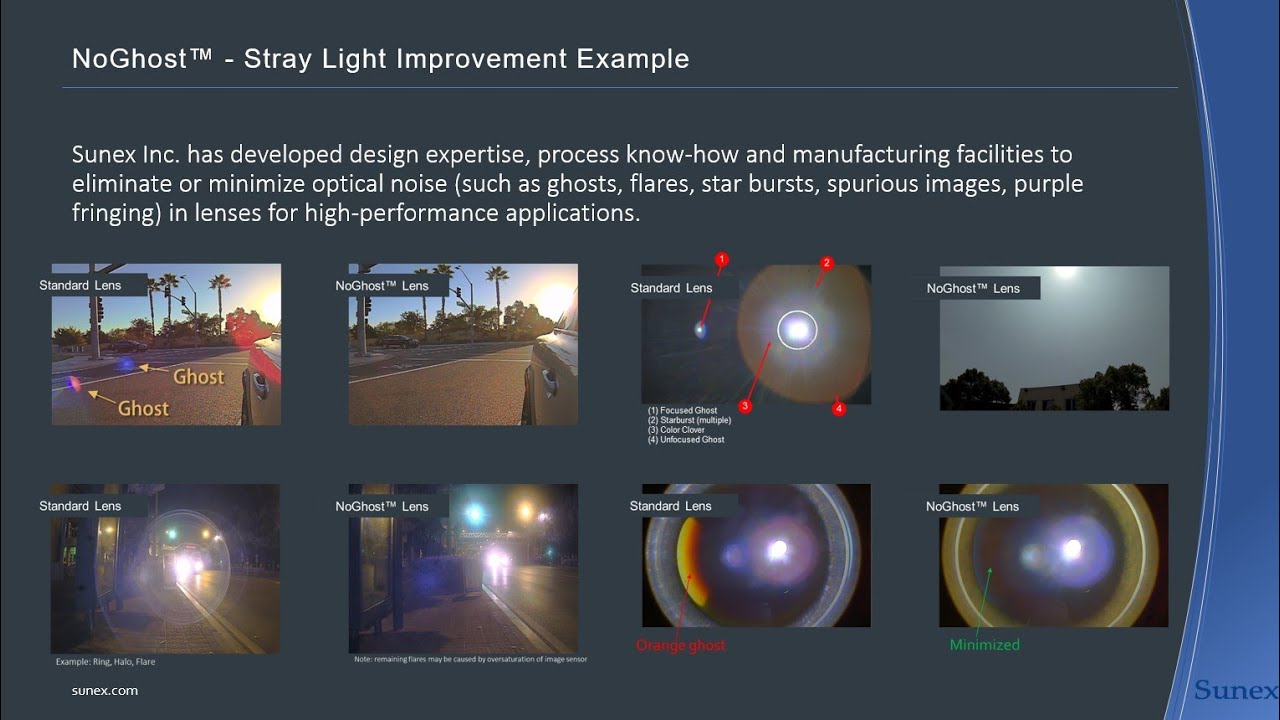
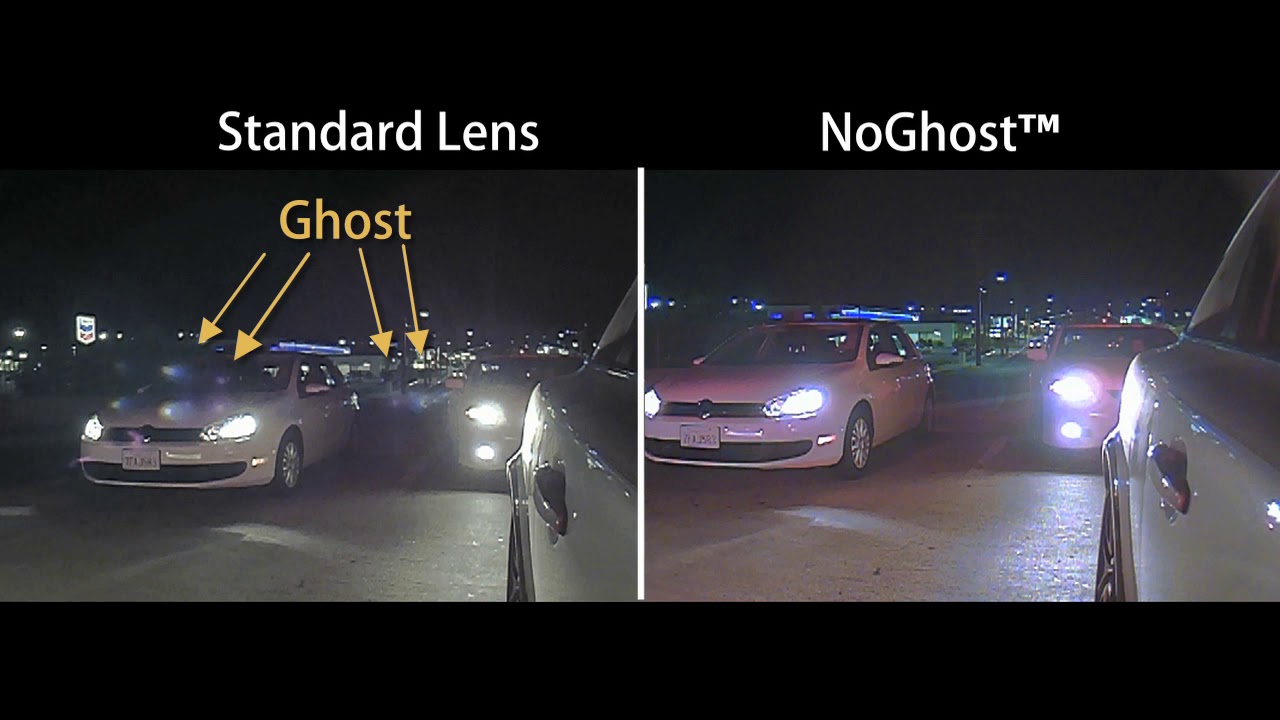
HDR (high dynamic range) sensors can capture light intensity variations up to six or more orders of magnitude within the same image frame (~120db). This puts a very demanding requirement on lens performance. Sunex has developed design expertise, process know-how, and nested cleanroom manufacturing facilities to eliminate or minimize optical noise (such as ghosts, flare, starbursts, spurious images) in lenses for high-performance applications.

Athermalization
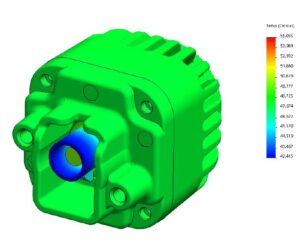
The shift of a lens’s focal point over a wide temperature range is a physical phenomenon based on the material-specific expansion and contraction with temperature. A decrease in image quality could be the outcome if the focal point of the lens relative to the sensor’s image plane shifts too much. A fully athermalized system requires selecting appropriate optical and mechanical materials, the right design strategy, and close collaboration with the customer to optimize thermal performance on a system level.

All graphs are for illustration purposes only. The individual lens performance can be different.

Supporting Services

Fast Prototyping
We provide prototyping services for complete lens assemblies often as the first step after a new custom design.
Sunex can produce prototypes with short lead times to verify the design before transitioning further on the path to mass production using state-of-the-art fabrication processes for glass and plastic optical elements and all mechanical components.

Interested in additional articles, white papers, and more?
Visit our Technology & Resource Hub and get free access to high-quality information.

Related Videos

8 Videos

Looking for additional video tutorials, shorts, and webinars? Check out the complete Sunex Video Library.

Download the PDF brochure

Upcoming Event Alert!

Meet us at one of the upcoming medical shows.

MD&M West 2026 – booth #772
February 3-5, 2026,
in Anaheim, CA, USA.

WHX 2026 – booth #N39.F55
February 9-12, 2026,
in Dubai, UAE.

Days
Hours
Minutes
Seconds