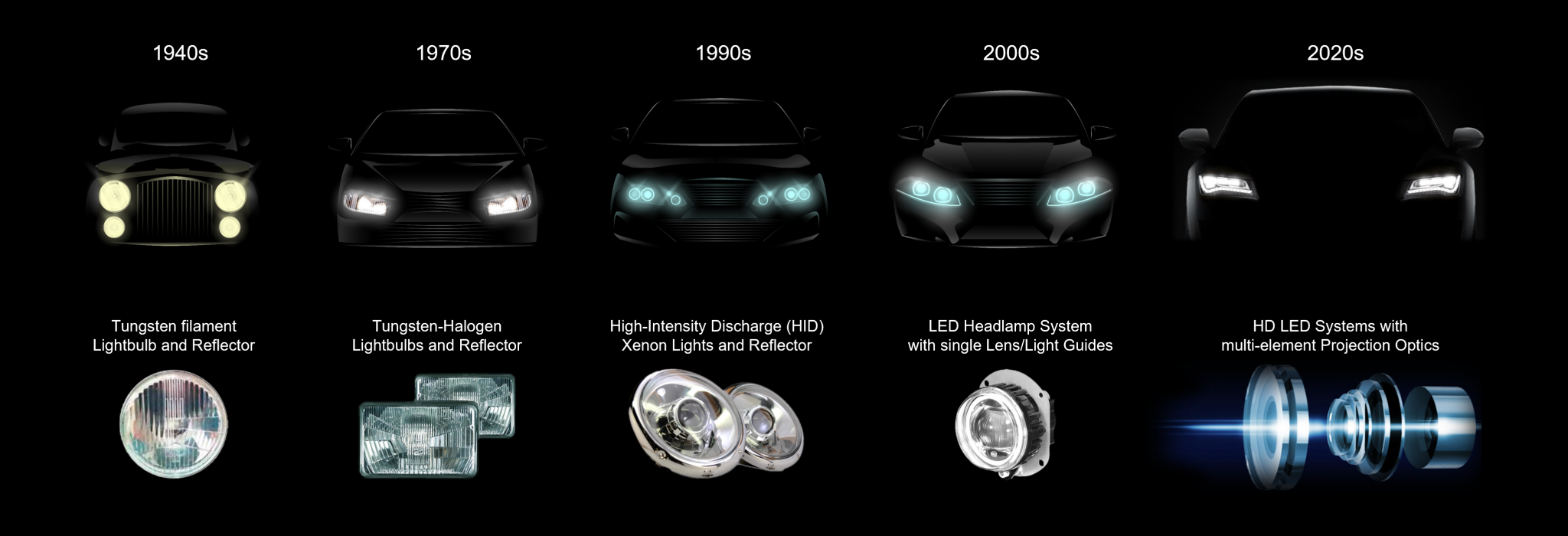
Lighting in automotive has come a long way. The earliest versions used candles, followed by fuel-based approaches burning carbide or oil from the late 1880s. The first electric lights were introduced in 1908, but were not at all common until the 1920s. However, once introduced, they quickly became the most noticeable form of “electrification” in automobiles, maybe only second to today’s full EVs and hybrid vehicles.
Optics already played a role in the early beginning in its most simplistic way. Carbide lamps used a reflective mirror at the inside of the headlamp to increase the total light output; others used a glass cover to protect the environment from the flame or to keep out dirt and water once light bulbs were used. Some of the first optical headlamps were introduced in 1917 to reduce glare, increase efficiency and range, and make driving safer by illuminating the roadside and enabling driving – up to 25 miles an hour – under bad weather conditions.
It is interesting that even though the technology has advanced far beyond what the early trailblazers of automotive headlamps could have envisioned, we still try to optimize for the same goals:
- reduce glare
- increase efficiency and range
- make driving safer
One key difference is that the industry has advanced from a single source and simple reflectors and light guides to arrays of thousands of individually controllable light sources. To meet the OEM’s requirements, wow the consumer, and satisfy the legislature, this new generation of light sources has to be paired with innovative projection optics.
Lighting functions in and around the car play an ever-increasing role in an OEM’s brand recognition and are a signature piece for corporate design consideration. From a purely technical perspective, modern high definition (HD) headlamps are designed for two main applications: Advanced Lighting Functions and Road Projections.
- Advanced Lighting Functions include Adaptive Driving Beam (ADB), glare-free HighBeam, dynamic curve light, illumination of traffic signs, and adjustments for different global regions. The overall focus is to increase safety by increasing visibility and reducing distraction. These systems typically cover a larger horizontal field of view (HFOV) and are optimized to bring as much light as possible on the street.
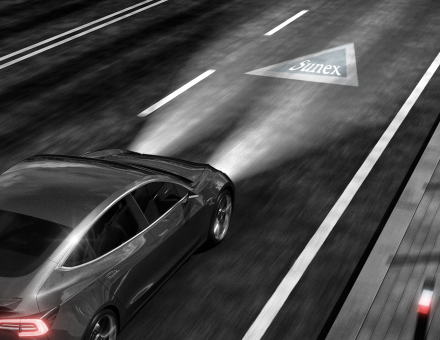
- Road Projection headlamps focus, as the name implies, on projections of symbols or information on the street to assist or warn the driver. The possibilities are almost endless and include convenience features where the car welcomes the driver, projects the OEM brand, or even plays tic-tac-toe on the garage door. However, more importantly, are warning and guidance possibilities. Emergency braking, frost warning, navigation, lane markings in construction zones, or communication with pedestrians will all become commonplace on our roads soon.
Tier 1s and OEMs also hope that a high-resolution headlamp system and a software-centric approach can reduce overall system complexity while increasing flexibility simultaneously; it is the promise of a single module that can adapt to different global market needs, regulations, and use cases. A software-enabled module could switch the low-beam cutoff-line profile to account for left-hand vs. right-hand driving or provide headlamp leveling capabilities.
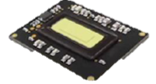
There are different technical solutions to highly pixelated advanced lighting and road projection headlamps, all with their distinct pros and cons.
 |  |  |  |  | |
|---|---|---|---|---|---|
| DMD | Matrix LED | µLED | Laser | LCD | |
| Resolution | 1M | 8-100 | >26K | 64K | 30K-50K |
| Image Mode | Subtractive (reflective) | Additive | Additive | Additive | Subtractive (absorptive) |
| Light Source | LED or Laser | LED | LED | Laser | LED |
| Optical Elements | 5 | 1-2 | 4-6 | 1 | 1 |
Laser and LCD systems will possibly stay niche and be used complementary. DMD-based solutions were the first ones to enable HD lighting for a high-end segment in the automotive market. It still has to show if the technology can transition to the mass market and how it will address the high(er) price tag, larger size, and the reflective imaging mode that somewhat works against optimizing the overall system for power consumption. The industry is putting high hopes into the now emerging µLED technology. It shows all the promising signs to emerge as the ideal bridge between the ultra-high-resolution systems based on DMDs and the well-established Matrix LEDs.